
The Science Behind Photography
Ever wondered how a camera works?
The word “photography” originates from two Greek words: “photos”, which means “light”, and “graphos”, which means “writing”. Photography can’t happen without light, just like how we can’t see without light. We see things because they either reflect light or they emit light, and those rays of light travel into our eyes, the same way they travel into the lens of a camera. There’s a lot more to it that just light traveling into a lens, though. There are two main types of cameras: film and digital. They’re similar, but they each work differently to produce an image. This article explains how they each work.
Most cameras, both film and digital, have flash, which provides enough light to enable picture-taking in dark areas. They also have viewfinders, which allow the user to see what the image they’re taking might look like. In digital cameras the viewfinder is generally a screen on the back of the camera that displays the image produced by the charged coupled device (which you’ll learn about later), while on film cameras the viewfinder is either a small hole which the user can look through for a rough approximation of the image, or a system of prisms and mirrors that allow the user to actually look through the lens of the camera.
Film cameras use photographic film to create pictures. Film is made of a thin plastic that is coated with special silver-based chemicals that react to light. These chemicals (called “silver halides”) start to turn into pure silver when light hits them. If more light hits them, they will become more metallic than if less light hits them. Because silver halides are extremely sensitive to light, photographic film needs to be sold in a light-proof plastic case so that it isn’t ruined. Black and white film only needs one layer of these chemicals, because it only recognizes the absence and presence of light. Color film works the same way, but needs three different layers: one sensitive to blue light, one sensitive to green light, and one sensitive to red light, in order to recreate all the colors in the spectrum. Film is also referred to as “negative” sometimes, because all the colors are opposite of what they should be.
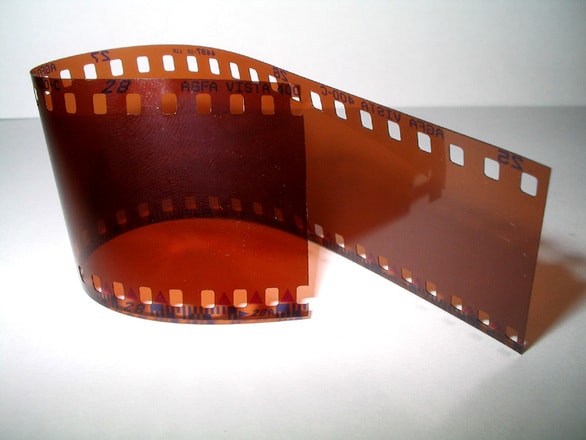
When a picture is taken with film cameras, the shutter (a set of spring loaded blades behind the camera lens that overlap each other to create a light-proof seal) opens very briefly to let a little bit of light in through the aperture (a small hole in the front of the camera that lets light in when the shutter opens). The exposure (the amount of light hitting the film) changes depending on how long the shutter stays open, and how wide the aperture is. Light travels through the aperture, and straight onto a segment of film.. The chemicals on the film react to the light, changing the film from a blank piece of plastic into a copy of the light that came in through the aperture. Just like when light passes through the lens of our eye, the light that passes through the lens of a camera is refracted, which means that the image on the film is actually created upside-down. Camera lenses are meant to concentrate and focus the light before it comes in through the aperture. That means that it scales down the rays of light so that they fit onto the film, and sharpens the image so that it’s viewable.
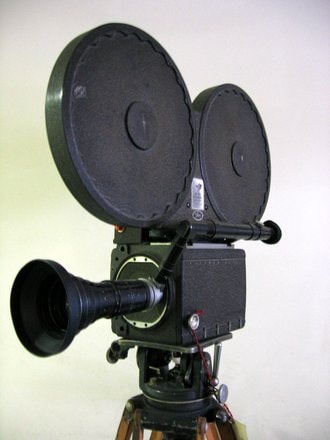
So, the photo is on the film, but it’s not viewable quite yet! If the film is taken out of it’s case at this point, it will be ruined because it will still react to light. It’s also very hard to even see the image on the tiny piece of film as it is, because there’s only very slight differences between the colors in the photo at this stage. The film needs to be developed before the photos can be viewed. This has to happen in a room without light that will ruin the film, generally called a darkroom. The darkroom is usually lit with either red or green light, because it won't wreck the image on the film.
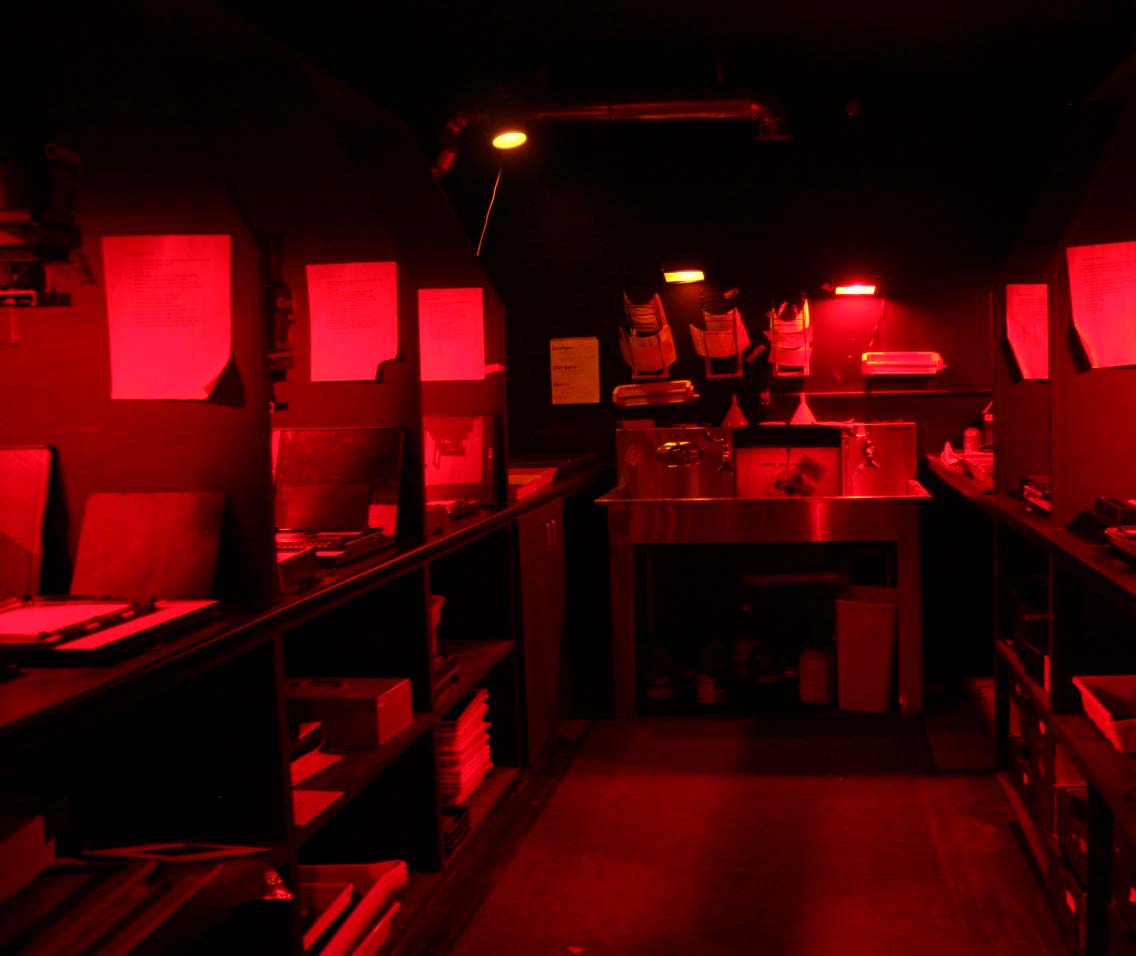
The first step to developing a photo is to dip the film in an acidic chemical bath called a developer. This allows the silver-based chemicals to continue turning into metallic, pure silver, and makes the image more visible. Of course, this process has to be stopped at some point or else the chemicals will keep developing and end up ruining the image. To stop the process, the film is then dipped into a solution called a stop bath to neutralize it. In order to make the image on the film permanent, it’s dipped in a solution called “fixer”. This chemical bath dissolves any extra silver halides. Afterwards, the film is rinsed with water and hung up to dry.
The film still needs to be processed further to be viewable. Since all the photos are still negative, everything looks opposite. Light areas are where dark areas should be, and dark areas are where light areas should be. To actually print the image, and have it turn out with the correct colors, a light needs to be shined through the negative and onto photo-sensitive paper. This process turns a photo into a “positive” or a print. With the use of lenses, the size can be increased or decreased. The negative can also be used multiple times.
A digital camera works similarly to the way a film camera does, except it processes the image much differently, It takes in light through the lens and aperture, and instead of hitting a segment of chemical-covered plastic, it hits a sensor called a charged-coupling device. This sensor, also known as a CCD, measures the brightness and color of light, and stores it as a number. Each photo is made up of lots and lots of pixels, each one having it’s own color (and its own number). Instead of having to get photos developed in order to see them, it’s possible to either plug the camera into a computer or just browse through the images on the screen of the camera itself to see what they look like. The device you are viewing the image on takes the string of numbers that the CCD came up with and interprets each number as a pixel, and each pixel has its own color. That means that digital cameras create photographs that can easily be stored on a computer, while film cameras create images that can’t be. It’s actually possible to store images from film on a computer, they just need to be scanned (this basically creates a digital copy of them, almost like taking a photo of the original photo), however this doesn’t always preserve the original quality. So, in the end, these cameras both produce images, only they do it in very different ways. Technology has come a long way since the invention of the film camera, that's for sure.